

We live in a storified world. Every day is a series of scenes. Each has a beginning, a middle, and an end. Some are full of brisk action and sudden change. Some are full of extended introspection and inner struggle.
Every person’s thoughts function as their own inner author. Trying to resolve the dilemmas before them. Trying to make sense of the unstoppable happenings around them. That is the essence of story, passing through conflict, seeking resolution. That is the essence of life.
We’re all born problem solvers, trying to make sense of the world around us. How do I get through this traffic? What will I say to this customer? How do I react to my friend’s struggles?
And within the answers to those questions lies great drama.
Words matter
As we navigate our days, our choices matter.
The individual scenes may not appear to have much significance, but add them up over years and years and that is your story. Is this scene leading you to grow, even through failure? Or is it pulling you another millimeter—or a yard—down into a dark and dangerous place?
Because the best stories, the ones that matter, are the ones that lead to characters becoming something more than they were at the beginning.
Not only does each scene contribute to the overall arc of our life, each word contributes to the its quality, syllable by syllable, sentence by sentence, scene by scene.
Angry words, innocent words, manipulative words, kind words, and harsh ones. They all tell us something about the nature of the characters, and the scene they find themselves in. Collectively they form the tenor of the tales we tell.

Some matter more
For most people, these words will matter most to the people around them. Most words do not live beyond the limits of our spheres of influence.
Yet this is not always so. Certain words mean more and tend to endure. There is a way to give words permanence and a more far-reaching effect. And it is one of the most glorious gifts given to men.
Of course I am talking about writing.
Many speak. Many read. But do we write?
These days, not so much. Once upon a time the world wrote letters, recorded thoughts in journals. These activities still go on, though to a far lesser degree. Email and texts have largely replaced them.
What about books and articles, you say? Yes, those still accumulate by the bushel-load, perhaps more than ever, but the masses rarely take the time to record their words in anything beyond what may be consumed as pixels on a screen.
Writing is the difference between renting and buying to own. You are spending your words to make a lasting investment, to have a place you can call your own, a place to dwell. If you don’t write, the words get spent all the same, but you have nothing to show for it.
The house that words built
Digital thoughts, like spoken words, tend to vanish into the air shortly after we express them. Yes, they are part of our story, and some will be remembered, but for the most part they will be lost and forgotten.
Writing a letter or writing down our thoughts in a journal or publishing a book lends weight and permanence to our words. Our stories matter, and when we record them, they matter more. Because writing requires thought, requires time, requires effort. And so we value those words more. They are refined and tested in a way our daily streams of speech are not.
Writing is the difference between renting and buying to own. You are spending your words to make a lasting investment, to have a place you can call your own, a place to dwell. If you don’t write, the words get spent all the same, but you have nothing to show for it.
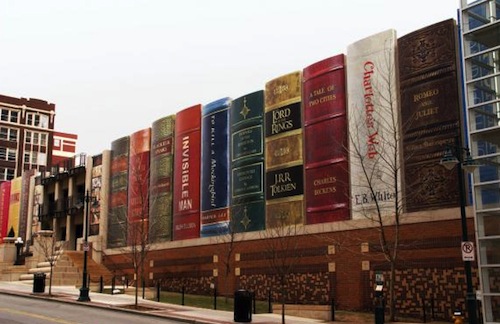
The powerful play goes on
We have no guarantee that our written words will be read. Just as we have no guarantee that a house we build will echo with laughter or prove inviting enough for friends to visit. Yet once written down, the words will at least be our own. We will have laid claim to them in a way the gives them endurance and value.
Your stories matter. Your words matter. You may not feel that way. You may feel you have nothing worthwhile to say. And yet by simple virtue of your value as a person they do. You are unique. No one can write what you have to write. You are alive at this time in history in a certain place on this world and have been given something to say.
The poet Walt Whitman’s words here come to mind
The question, O me! so sad, recurring—What good amid these, O me, O life?
Answer.
That you are here—that life exists and identity,
That the powerful play goes on, and you may contribute a verse.
All of us are storytellers. Some just write them down.
Build the house. Own your words. Write.


Thank you for the well written call to arms to write! Perhaps your words are the ones I need to get me out of my stasis.
Thank you for the comment and encouragement. May it be so. No time to start like now. It’s the only time we have.
Wow, beautiful post! Thanks for this. Words to ponder on!
Thank you, Deborah, for the kind words.
Thank you so much for this. 🙂 It’s really cool.
Thanks, Rebekah. So glad you enjoyed it.
Pingback: What Winston Churchill taught me about writing fantasy novels - djedwardson.com